Yanmar Power Solutions Co., Ltd., part of Yanmar Holdings, has reached a major milestone by becoming the first engine manufacturer in Japan to receive key safety and emissions approvals for a hydrogen-fueled engine. The approvals, issued by Nippon Kaiji Kyokai (ClassNK), cover a high-speed, four-stroke engine designed to generate power for domestic coastal vessels and form part of the Nippon Foundation’s Zero Emission Ships Project.
Throughout 2025, Yanmar Power Solutions has been carrying out extensive land-based testing of its hydrogen engine, using a small amount of Hydrotreated Vegetable Oil (HVO) as a pilot fuel to support ignition. Following a successful inspection by ClassNK, Yanmar received the required approvals to move into the next phase — type approval in October 2025 and NOx emissions approval in December 2025. These certifications allow the engine to progress to operational trials. The next step will see two hydrogen engines installed on domestic coastal vessels, with on-water demonstration trials planned for later this year.
Yanmar Power Solutions is working to support a cleaner future for the shipping industry by bringing hydrogen engine technology into practical use. These engines have the potential to produce almost zero CO₂ emissions, helping reduce the environmental impact of marine transport.
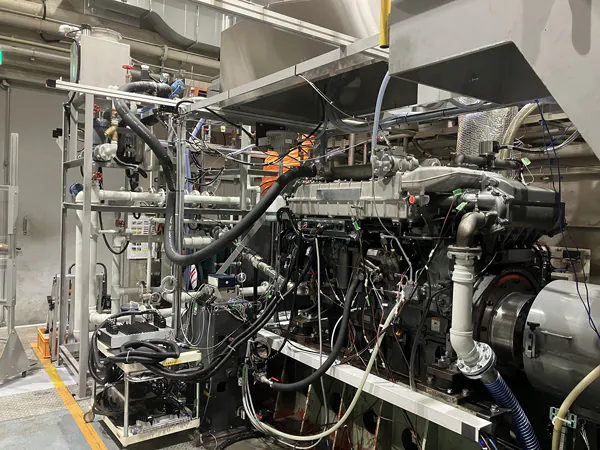
Demonstration model of a pilot-ignition hydrogen 4-stroke high-speed engine
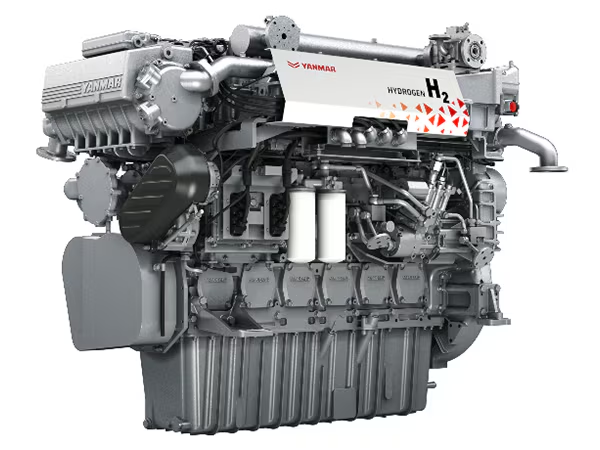
Rendering of the Pilot-Ignition Hydrogen 4-Stroke High-Speed Engine
About the Zero Emission Ships Project
The Zero Emission Ships Project, led by the Nippon Foundation, aims to develop vessels that can operate with zero emissions using hydrogen power. As part of this initiative, a consortium that includes Yanmar Power Solutions is advancing hydrogen engine technology, alongside the development of a hybrid electric vessel that combines a hydrogen-powered generator with battery storage. The vessel features a container-style hydrogen power system installed on the upper deck, with development and construction being carried out by Uyeno Transtech Co., Ltd., a shipping company within the Uyeno Group.
The Benefits of the Hydrogen Engine
In practical terms, this technology represents a major step toward cleaner and quieter coastal shipping. By combining hydrogen power with battery storage, vessels can significantly reduce carbon emissions while maintaining reliable performance. The modular, container-style system also makes it easier to install, service, and adapt the technology for different vessel types, helping accelerate the adoption of low-emission solutions across the marine industry.